

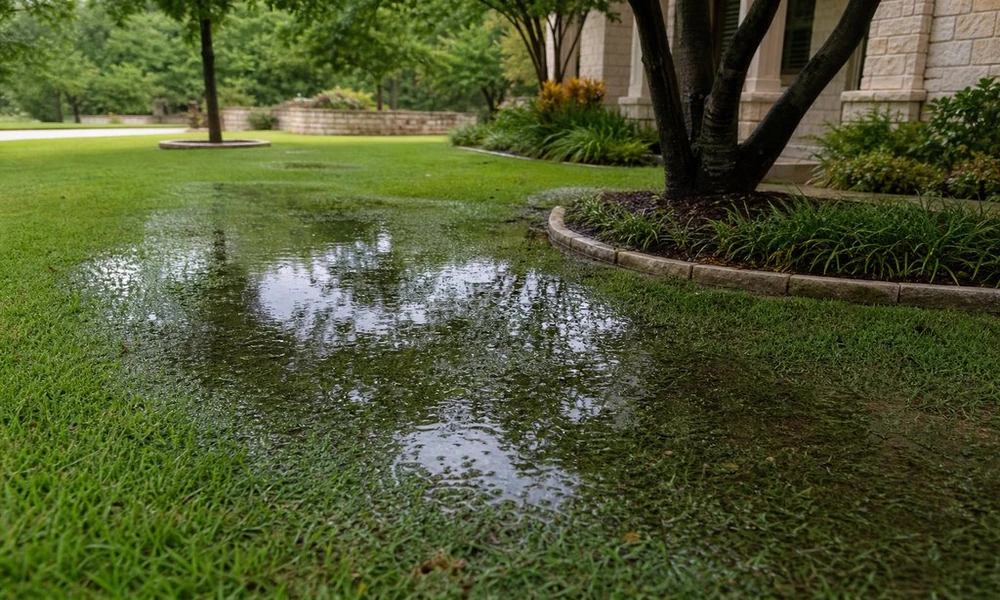
Standing water in the landscape after a heavy rain may not seem like a big deal, but over time it can cause weak or dying grass, soil erosion, muddy areas that are difficult to use, and attract insects. In some cases, it can lead to moisture problems around patios, walkways and even the foundation of your home.
Finding the Cause
Standing water may be corrected by regrading part of your yard or it may require a more complex solution that intercepts the water and redirects it to another location. Before deciding which approach will work best for your situation, it’s important to determine why the water is standing in the first place. Is the water coming from a downspout? Compacted soil? Your neighbor’s property? Hardscape area draining into the lawn?
Here are some clues that you have a drainage problem:
- Standing water after a rain event
- Grass that is thin or yellow
- Soil stays muddy while surrounding areas dry out
- Mulch blows or washes out of flower beds
- Water drains to walkways, patios or collects along fence lines
- Water collects around the foundation of your home
Often times the low spot in your yard where water collects is not the actual problem, but just where the problem becomes obvious. Simply adding soil to raise an area is unlikely to solve the problem and in many cases will just relocate the standing water problem to another area of the yard.
Belowground Fixes
Regrading
When the standing water is fairly shallow and covers a large area, regrading the landscape may be the best solution. Regrading your yard will require reshaping the existing grade so water moves away from structures toward a suitable outlet, with yard drainage in San Antonio planned around site-specific routing. In most cases, regrading your landscape will require adding additional topsoil and reseed or resod the affected area.
Have the person performing the regrading work verify that the end result will drain away from your home and not to your neighbor’s property. Be mindful of any utility lines, easements or other drainage issues before changing the grade on your property. There may be restrictions in your area for how you can regrade your property and where you can drain the water.
As a general rule of thumb, the grade should drop about 6″ as it extends out from the foundation of the home. The specifics of your situation will vary based on your particular situation including, but not limited to, any existing drainage areas, hardscape and layout of the home.
French Drains
French drains are used to collect groundwater from an area. Typically, a French drain will include a perforated pipe laid in a trench that has been filled with gravel. The French drain will collect groundwater, as discussed at https://education.nationalgeographic.org/resource/groundwater, and drain it to an outlet. This may be a good solution when the lawn remains soggy after a rain event, flower beds remain wet, or when you see water collecting at the edge of a patio. The drain should be placed at the correct depth and grade, and there should be an outlet for the water.
Surface Flow Options
Surface Drains
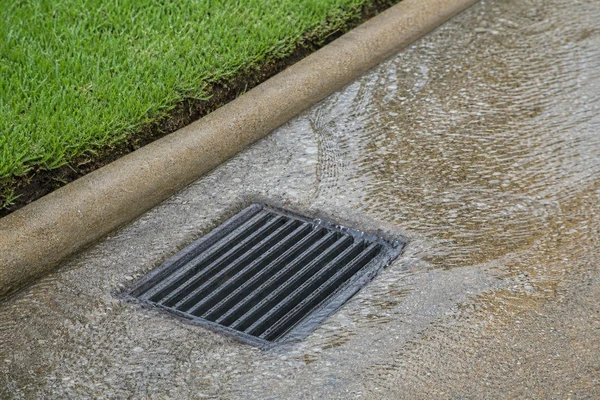
French drains are meant to collect water from groundwater and not necessarily surface drainage. If you have water quickly making its way down a driveway, patio or even some high traffic lawn areas, a surface drainage system may be more appropriate for your situation. A surface drainage system collects water from visible inlets or grates that are typically placed in a low spot. These systems may include one or more of the following:
- Catch basins at problem areas
- Solid piping to drain water away from the area
- Channel drains next to patios and other hardscape
- Connecting downspouts to the system to help drain the roof away from landscape areas
Creek Beds and Swales
Not every drainage system has to be unsightly! Dry creek beds use gravel, rock and grade changes to create an attractive drainage solution. These can be helpful on slopes and can reduce erosion issues.
Irrigation and Next Steps
Any time you are changing drainage around your home it’s important to take your sprinkler system into consideration, a point recognized by the team at Moore Irrigation Services. Locate sprinkler lines before starting any digging project. After the project is complete, make sure that your sprinkler heads are still oriented in the correct direction. It’s also possible that once the area is draining properly that your watering schedule may need to be adjusted.
Once the drainage is corrected, it’s likely that any landscape that had drainage issues will recover. In some cases, additional lawn and landscape care may be needed to help the area recover including, but not limited to, aerating and fertilizing. In some cases, it may be easier to just replace a small area of lawn than to try and get it to recover.
Choosing a Solution
Unfortunately, there is no one size fits all answer for this question. In some cases, more than one solution may be required. The best place to start is observing where the water is actually draining to after a rain event. Try paying attention after the next rain and see where the puddles are forming.
